The Odd Fish - Spotted Seahorse


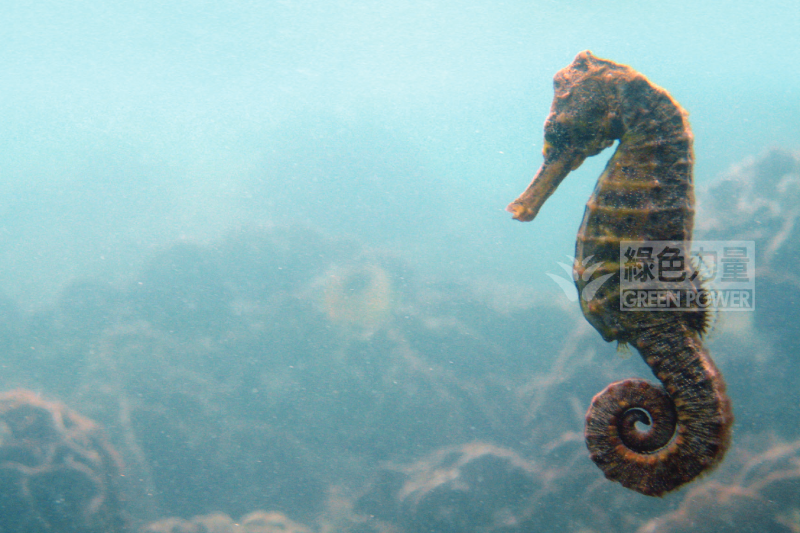
If one is to choose the most unfishlike fish in the sea, Seahorses ought to be the one. They have horse-like heads, brood pouches resembling a kangaroo's, monkeyish tails, and armoured bodies. Notwithstanding the unfishlike form of a Seahorse, there is nothing fishy about it being a fish. Three species of Seahorses have been sighted in Hong Kong waters. Though the Spotted Seahorse (Hippocampus kuda) is the most common, its population is small and has been classified as "vulnerable" species, warranting proactive protection.
Spotted Seahorse is widely distributed throughout the world, from the Persian Gulf to the waters in Southeast Asia, Australia, Japan, and eastern Africa. Its grotesque physical features make it instantly recognisable: a head positioned perpendicular to its bone-ringed body, an elongated tube-shaped snout that sucks up planktons into its toothless mouth, and a curly prehensile tail to wrap tightly around seagrasses or corals to prevent it from being carried away by currents.
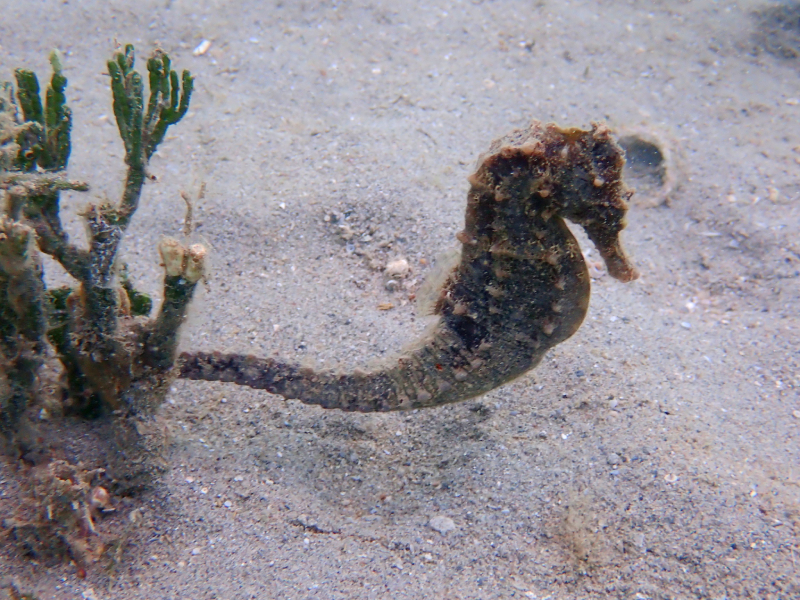
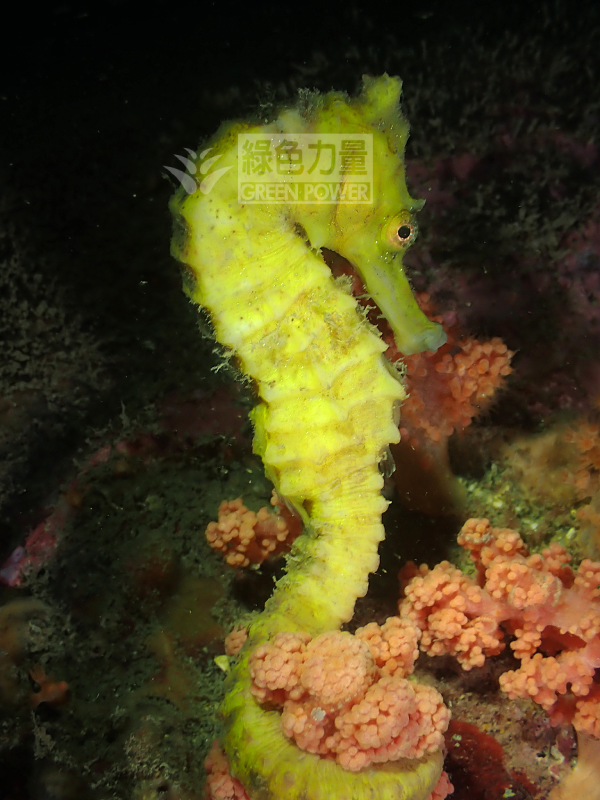
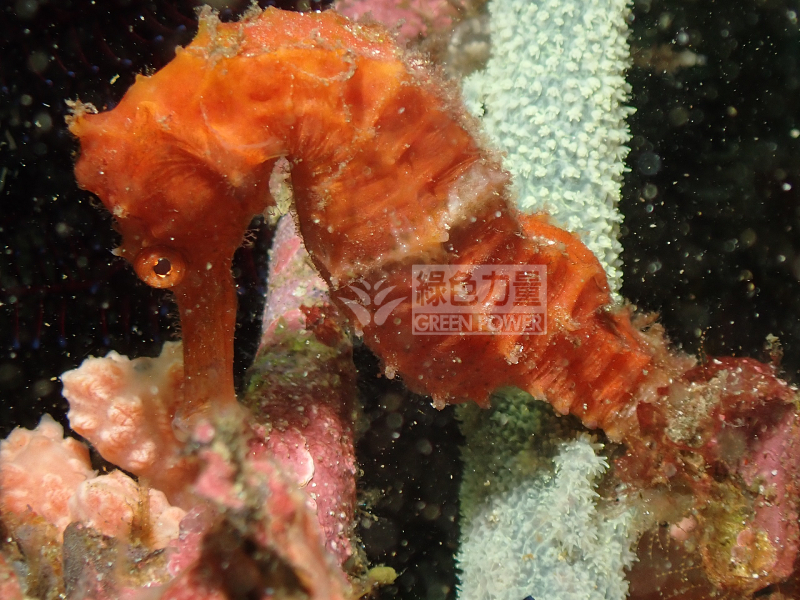
An adult Spotted Seahorse is about 11cm to 13cm long. It can reach up to 30cm in length. Seahorses come in many colours, including those found in Hong Kong, e.g., shades of yellow, reddish orange, brown and black.
Three species of Seahorses have been recorded in Hong Kong: Three-spot Seahorse (Hippocampus trimaculatus), Great Seahorse (Hippocampus kelloggi), and the above-mentioned Seahorse. Encounter with Spotted Seahorses is a rare event despite them being the most common of the three. Data on the distribution and abundance of Seahorses in Hong Kong are sorely lacking.
Birth-giving Dads
Male pregnancy is peculiar to Seahorses. A male Spotted Seahorse gives birth like all other species in the genus Hippocampus. During courtship, a female deposits eggs into a male's brood pouch. He then fertilises and incubates them to term, usually 20 to 28 days. With powerful contractions, he spews out fully developed fry, from dozens to a thousand. Newborn Seahorses, measuring only 6mm to 8mm in length, float close to the water surface for the first two weeks before settling down on the seabed after a period of 19 to 22 days.
Threat of Overfishing
Seahorses are a highly prized traditional Chinese medicine, albeit without evidence to suggest its curative powers, which has resulted in them being heavily fished in staggering numbers, estimated at tens to hundreds of millions a year. International trading of all species of Seahorses is regulated under the Convention on International Trade in Endangered Species of Wild Fauna and Flora (CITES) Appendix II. But their depletion continues unabated with persistent loss of habitats - seagrass beds, corals, mangroves, estuaries and more - in the wake of urban development and reclamation.
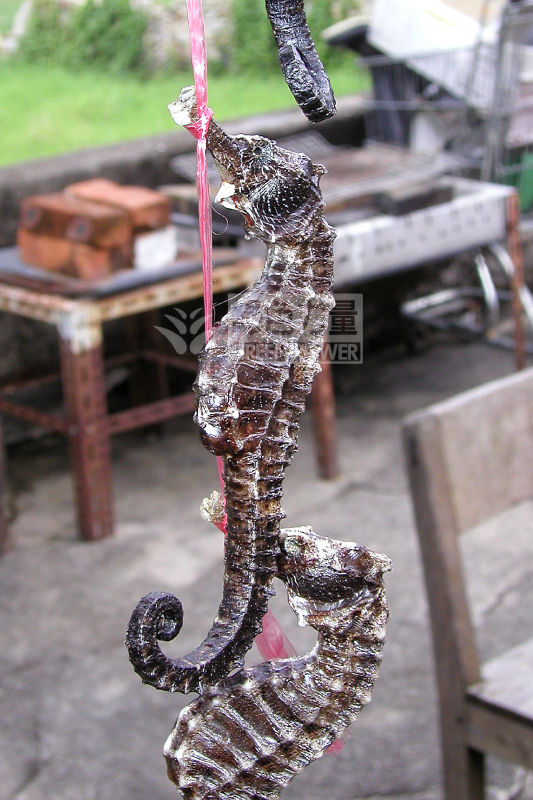
Spotted Seahorse is classified as "vulnerable" species by the International Union for Conservation of Nature (IUCN) in its Red List of Threatened Species. Organisations the world over have been on a rescue mission to save it and other species of Seahorses. Local green groups have kept their finger on the pulse for some years, with surveys and labelling of Seahorses in Hong Kong. Their existence and distribution can also be learned from the Hong Kong Reef Check - an annual survey of corals - by the Agriculture, Fisheries and Conservation Department, which includes Seahorses in the indicator species for assessing coral health.