Pave It, No More Rough Patch!?


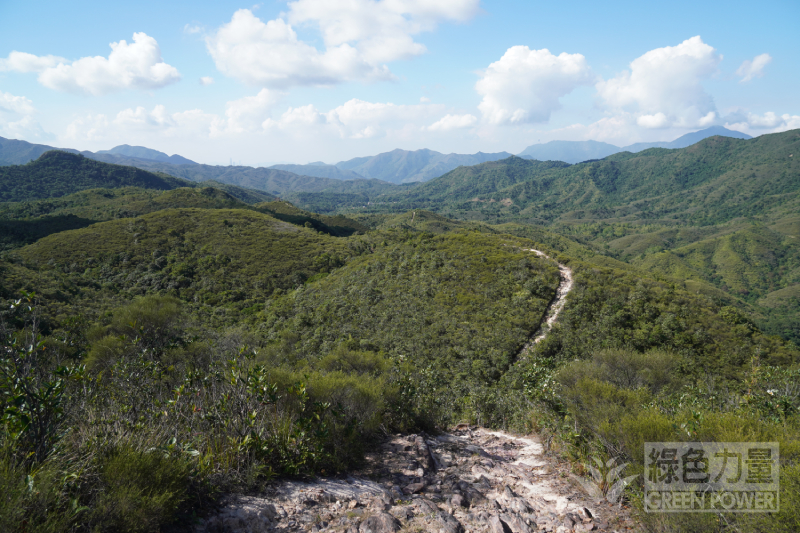
Hiking is a popular holiday pastime for many people, both locals and visitors, who flow into Hong Kong's world-renowned trails and therefore lead to significant wear and tear on them. The country parks have more than 80 trails, including hiking trails, country trails, nature trails and family walks, which total over 500 kilometres in length. There has been talk about paving the trails with concrete to reduce the cost of time-consuming and labour-intensive trail repair and to be more hiker-friendly. The idea was met with fierce opposition. Not only are concrete trails incongruous with natural surroundings, they are also a worse alternative.
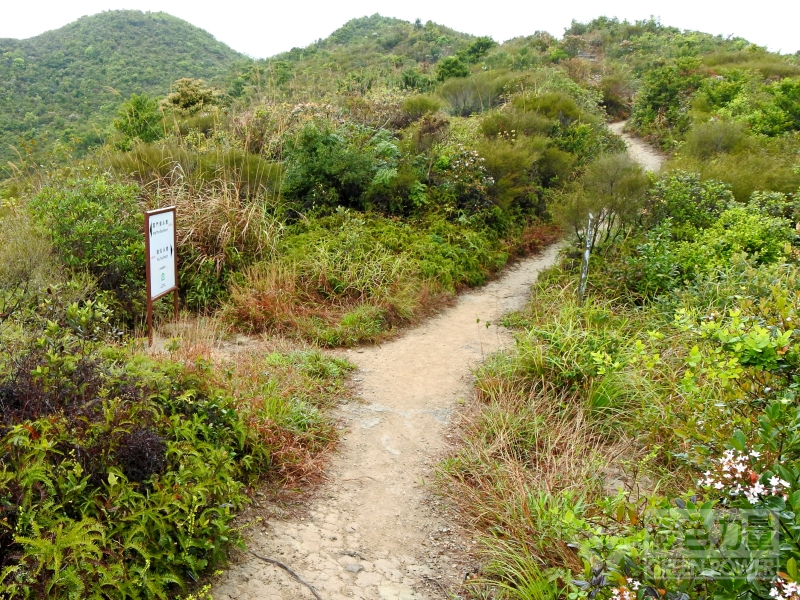
Most of the hiking trails in Hong Kong have made use of soil and stones to stay natural. These natural materials are valued for their sponge-like permeability which allows rain drops to percolate through tiny pores in the soil to the underground. In addition to preventing surface runoff which results in erosion, the soil sponge benefits surrounding plants with water.
Replacing them with concrete trails transforms the physical qualities of the land. If the porous soil is covered in smooth and waterproof concrete pavement, rainwater flows down on both sides of a concrete trail, carves gullies and causes serious erosion. As weathering develops, the concrete trail collapses into its hollowed base and tears. The more elevated a concrete trail, the faster the erosion.
Plant roots respire through pores, "the air channel", amongst soil particles. A concrete trail blocks the air exchange between the soil and the atmosphere, with consequent stunted growth of root systems which are essential for both the plant growth and binding the soil together to prevent erosion. Thus, a vicious circle is established: lack of a vegetation cover which holds the soil in position produces erosion; loss of topsoil forestalls growth of plants on either side of a concrete trail.
Temperature wise, an earth surface is preferable to concrete which absorbs a lot more heat in direct sunlight before long. This difference in surface temperature explains the reason why concrete pavement gives one burning feet while a dirt path cools them in summer. For animals, i.e. insects, amphibians and reptiles, surface temperature has a bigger impact beyond comfort. A hot and dry concrete path with little vegetation on either side to provide shade stands in the way of their migration, and hence tears their colonies apart as an impassable boundary. In the long term, concrete pavement represents an existential threat to these animals.
Trails Made of Natural Materials
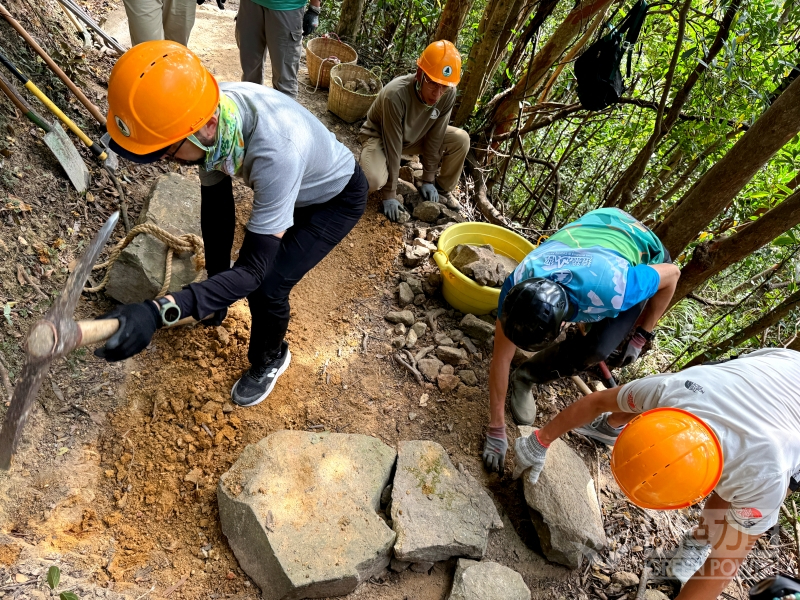
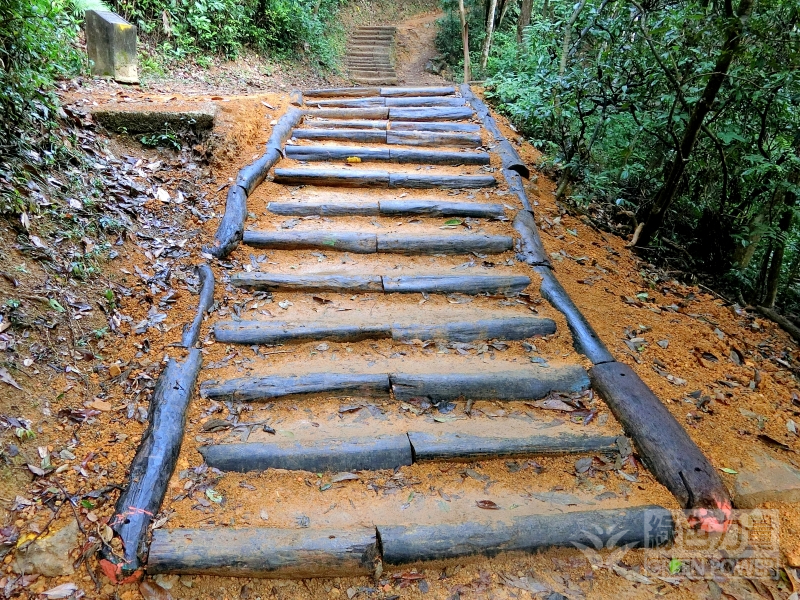
Trail maintenance and repair fall in the remit of the Agriculture, Fisheries and Conservation Department (AFCD). The department's motto has been "Take it from nature and use it on nature." This is translated into using natural materials in the immediate surroundings like small stones and wood to make trails, steps and drainage channels. Lugging trail supplies around and making trails by hand is time-consuming and labour-intensive work but has the merits of preserving biodiversity, keeping things in harmony with nature, and providing pleasant experiences for hikers.
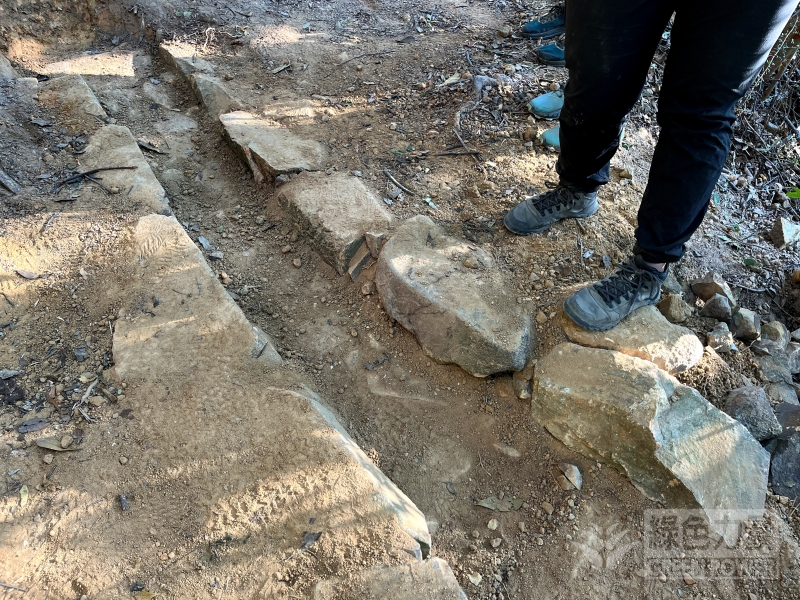
Hong Kong has a number of ancient trails, connecting towns and villages, which have existed for hundreds of years. They are a testament to the longevity of natural trails. To increase the life expectancy of hiking trails, hikers should avoid: sidestepping to harm the vegetation cover and plant roots on either side of trails; and straying from the trail to take shortcuts. Proactive action includes alerting the AFCD when you come upon a trail falling into disrepair and taking part in its "Repair Our Own Trails" Scheme of which Green Power is one of the co-corganisers.