The Secretary,
Town Planning Board,
15/F, North Point Government Offices,
333 Java Road, North Point, Hong Kong
(Email: tpbpd@pland.gov.hk)
Green Power is writing to submit our views on the proposed amendments to the above Draft Outline Zoning Plan (Draft OZP).
On-going Joint Effort to Conserve Tung Chung River
1. Tung Chung River (TCR) is often referred to as "the last large-scale natural river in Hong Kong", which lower course is running within the Planning Scheme Area of Tung Chung Valley Outline Zoning Plan (TCVOZP). It is a recognized important biodiversity hotspot which harbours various species of conservation concern, as well as an invaluable natural asset of our city. Its conservation echoes the concept of “Rivers in the City” highlighted in the 2019 Policy Address, and deserves our utmost effort and attention.
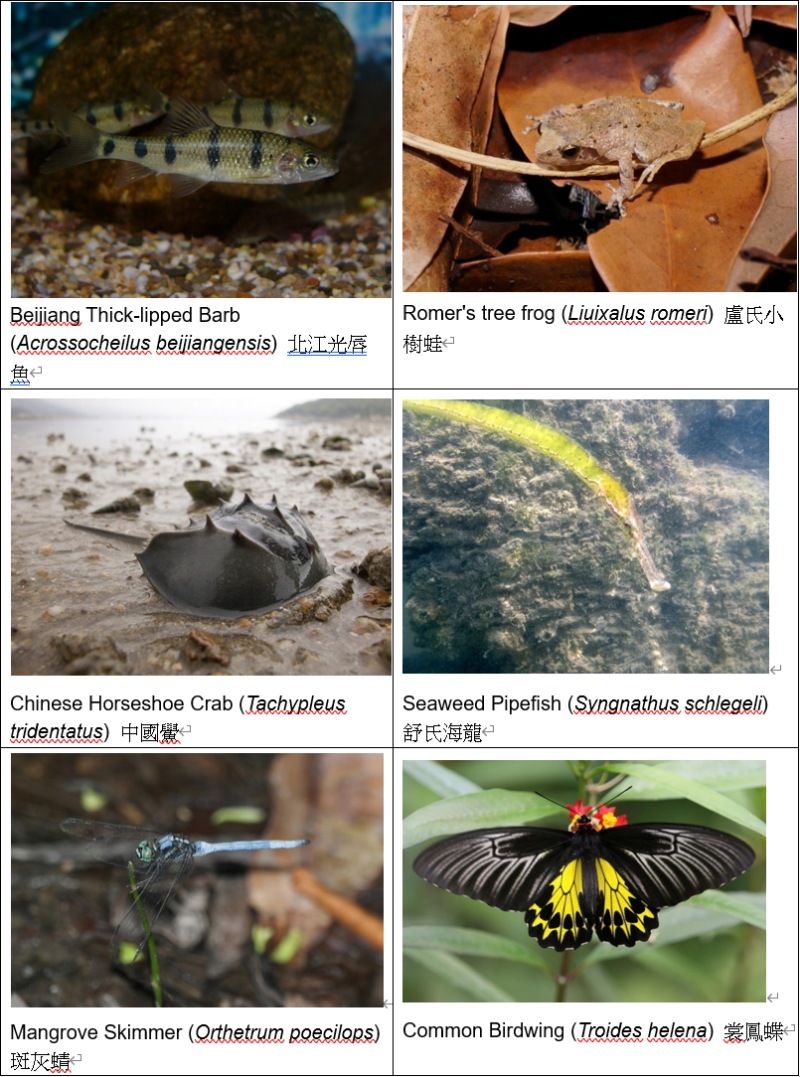
2. Tung Chung River Basin cum Bay in Tung Chung West (TCW) is one of the few remaining major streams in Hong Kong which has been largely retaining its natural state from headwaters to its estuary, TCR is unique in the local context. Nurturing the second rich freshwater fish biodiversity, it is designed as Ecologically Important Streams (EIS). The high connectivity and continuity of the river system from the montane area to the estuary, as well as diverse habitat types available in the surrounding land area make the river valley exceptionally rich in aquatic, terrestrial and coastal biodiversity, and accommodate species of ecological importance, e.g. Beijiang Thick-lipped Barb (Acrossocheilus beijiangensis) 北江光唇魚, Philippine Neon Goby (Stiphodon atropurpureum) 紫身枝牙鰕虎魚, Romer's tree frog (Liuixalus romeri) 盧氏小樹蛙, Chinese Horseshoe Crab (Tachypleus tridentatus) 中國鱟, Seaweed Pipefish (Syngnathus schlegeli) 舒氏海龍, Swinhoe’s Egret (Egretta eulophotes) 黃嘴白鷺, Mangrove Skimmer (Orthetrum poecilops) 斑灰蜻, Common Birdwing (Troides helena) 裳鳳蝶 and Eurasian Eagle Owl (Bubo bubo) 鵰鴞. (Appendix 1)
3. Since the early planning stages of the Tung Chung New Town Extension (TCNTE) in 2012, major local environmental groups have been advocating the importance and principles of conserving Tung Chung River cum Bay in TCW amid the increasing urbanization pressure, with emphasis on protecting its morphology, hydrology, water quality and biodiversity at the catchment scale. The Administration responded to these requests at various stages of the new town planning process, including the introduction of the city’s first Sustainable Urban Drainage System (SUDS) and River Park (RP) during the design stage of the new town in Tung Chung West, as well as the incorporation of environmental groups’ comments during the design, construction and operation planning of these elements. However, the aim of conserving TCR could only be achieved when all parties involved in the TCNTE understand its importance and commit to protecting it.
4. We are deeply concerned that the captioned amendments to the TCVOZP neglects the ecological and social value of Tung Chung River Basin cum Bay in TCW and undermine the vast and long-terms joint effort of the Administration, concerned groups and non-governmental organisations having been taken over decade to conserve and incorporate Tung Chung River Basin cum Bay in TCW as integral part of hydrology, biodiversity hotspot and blue-green component of new town landscape.
Drawback of Amendment Item A
5. We disagree to Amendment Item A – the rezoning of a site at the junction of Yu Tung Road and Chung Mun Road from "Residential (Group C)2" to "Residential (Group B)" with substantial increase of maximum building height from 55mPD to 100mPD.
6. "The general planning intention of the Area (where Tung Chung River and Tung Chung Bay situated) is to conserve the ecologically sensitive areas, to protect the rural and natural character, to maintain the unique landscape character and cultural heritage of the Area" (Sec 8.1, GENERAL PLANNING INTENTION, Explanatory Statement). Amendment Item A impose additional environmental impacts to an area of recognised ecological sensitivity, adjacent to the Tung Chung Stream riparian corridor and near culturally significant sites such as Hau Wong Temple. Increasing the building height and development density will interfere the already fragile ecosystem of Tung Chung River cum Bay in TCW through pollution and disturbance, such as noise nuisance, light pollution, polluted surface runoff and littering, and also threaten the unique landscape and heritage characters of Tung Chung Valley and Bay.
7. The Amendment Item A also contradicts the consensus achieved under three stages of public engagement for the "Tung Chung New Town Extension Study (the Study) jointly commissioned by the Civil Engineering and Development Department (CEDD) and Plan Department with the overall objective to extend Tung Chung into a distinct community which can meet housing, social, economic, environmental and local needs" (Sec.7.1, PLANNING DESIGN CONCEPT AND FEATURES, Explanatory Statement). The consequent land uses, zonings and planning parameters are reflected in the first draft of TCVOZP as a result of thorough researches and discussions in the society. Convincing reasons and enforceable measures should be provided to concur such public consensus.
8. In view that "Development potential of the New Town extension has been maximized, taking into account various constraints and considerations" and "due care has been exercised to ensure that the development be balanced against environmental considerations" (Sec.7.1.1 and 7.1.2 respectively, PLANNING DESIGN CONCEPT AND FEATURES, Explanatory Statement), expansion of development capacity will impact the environment and ecology irreversibly. Particular measures should be provided to avoid overloading of environmental capacity of Tung Chung River Basin cum Bay system in TCW.
9. While the amendment includes a non-building area (NBA) for air ventilation, additional measures should be in place to protect the adjacent "CA" and "CPA" zones against cumulative impacts of local traffic, polluted stormwater drainage, and utility infrastructure.
10. The Amendment Item A deviates from the planning goal to "maximize integration with the existing built form and to balance the need for new residential developments with preservation of the natural environment" (Sec.7.1.4, PLANNING DESIGN CONCEPT AND FEATURES, Explanatory Statement). The proposed built form should observe "the overall stepped BH profile of Tung Chung New Town descending from the mountain side towards the waterfront and the estuary of the Tung Chung Bay….. from south to north" (Sec.9.2.3 & 9.3.1, LAND USE ZONINGS, Explanatory Statement).
11. Owing to forementioned reasons, we urge the Board to retain the original "Residential (Group C)2" zoning for this site, or to subject any future development to stringent environmental impact assessments, with enforceable mitigation measures to secure the hydrological, ecological, environmental and landscape function of Tung Chung River Basin cum Bay ecosystem in TCW.
Measures Synchronizing Joint Effort to conserve Tung Chung River
12. Planning controls should be stipulated in the TCVOZP to avoid unnecessary disturbance and pollution to Tung Chung River and future Tung Chung River Park (RP) through adequate building, site landscape and drainage design.
13. No public access should be connected to Tung Chung River Park (RP) to avoid uncontrolled human disturbance and pollution, as it is a flood prevention facility and ecologically sensitive site.
14. In this regard, proper fencing or escalated level in housing site (similar to Yat Tung Estate ground level relative to Ma Wan Chung village) should be in place to deter trespassing from the residential development to RP or Tung Chung River course.
15. The runoff of wet markets, if any, and refuse collection points, within the residential developments and in their periphery, is always heavily polluted, loaded with refuse and foul smelling that should be completely collected to sewers and should not be discharged, diverted and/or allowed to flow to RP, Tung Chung River or Tung Chung Bay.
16. Vehicular parking areas should locate in sheltered balconies that all surface runoff, with minimal rainwater received, should be completely collected to sewers that will not contaminate the surface runoff on ground level with fuel, lubricating oil and wastewater generated by car-washing.
17. The surface runoff should not be directly discharged to Tung Chung River on the ground surface and through stormwater drains. The ground level of the residential developments should be topographically inclined away from river course of Tung Chung River that the surface runoff will not flow into Tung Chung River directly by gravity.
18. Other measures proposed by environmental groups and relevant departments should be incorporated into the TCVOZP to avoid the non-point source pollution which occurs day-to-day in stormwater drainage system in the territory resulting in long-terms devastation of water quality and ecology of modified and natural watercourses. Forementioned preventive measures should be implemented at the commencement stage, or construction stage, and operation stage of residential developments. Retrofitting of these measures is not a feasible option for TCR, a fragile and one of the few last remaining local natural rivers.
19. Sustainable Urban Drainage System (SUDS), including but not limited to rain gardens, bioswales, permeable pavement, biological treatment wetlands, should be installed in residential developments to minimise the hydrological impacts and pollution loading to Tung Chung River. Also, the performance of these privately maintained SUDS facilities should be effectively monitored and overseen by governmental departments so as not to abuse the capacity of government-run SUDS for public assets.
Amendment Item B
20. We agree in principle to amendments under Item B. The rezoning of lands near Hau Wong Temple, Ngau Au and Shek Mun Kap to "Conservation Area" ("CA"), "Coastal Protection Area" ("CPA"), "Green Belt" ("GB") and other low-impact zones should reflect planning intention to preserve the ecological integrity, natural landscapes and sensitive habitats of Tung Chung River Valley. The land uses under Column 1 and 2 should be consistent with the planning intention to protect the area's high ecological value, including the Tung Chung Ecologically Important Stream, mature woodlands, and coastal habitat and the whole Tung Chung River Basin cum Bay ecosystems in TCW.
Thank you very much for your kind attention. For any inquiries, please contact the undersigned at Green Power (T: 3961 0200, F: 2314 2661, Email: info@greenpower.org.hk).
Yours faithfully,

LUI Tak Hang, Henry
Senior Conservation Manager
Green Power
Yours faithfully,
LUI Tak Hang, Henry
Senior Conservation Manager
Green Power